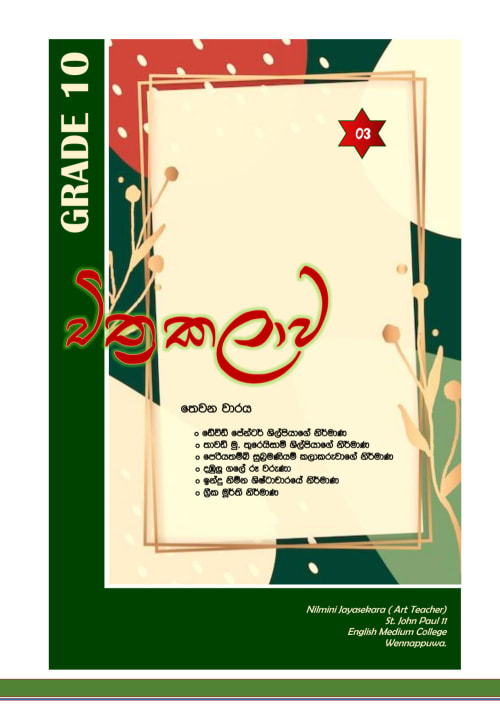
Grade 10 Art Reading Book - Term 2
Grade 10 · ART
Term two of the Grade 10 Art reading book. Nine units covering George Keyt, Leonardo da Vinci, Michelangelo and Raphael Sanzio, then the Embekke Devalaya, the Sri Dalada shrine at Senkadagalapura, the Medawala Tampita Vihara, the Degaldoruwa Raja Maha Vihara, and Egyptian sculpture and painting.
Community rating
Rate this resource
About this resource
"Grade 10 Art Reading Book - Term 2" is a textbook for Grade 10 Art, prepared by Nilmini Jayasekara. It covers term 2.
You can read 5 pages here before downloading. The full document needs no account and no signup.
Read it alongside the annual teaching plan for the same term - the plan lists the competencies each unit is assessed against, and this book is the material those competencies are taught from. Grade 10 students should work through the terms in order, because later units assume the vocabulary introduced earlier.
What this term covers
Term two is the longest of the three and the widest in range: one Sri Lankan modernist, three Renaissance masters, four Kandyan-period sites and a first look at ancient Egypt. Nine units in one term means you cannot leave it to the last fortnight.
- The work of George Keyt
- Leonardo da Vinci, Michelangelo Buonarroti and Raphael Sanzio
- The Embekke Devalaya
- The Sri Dalada shrine at Senkadagalapura
- The Medawala Tampita Vihara
- The Degaldoruwa Raja Maha Vihara
- Egyptian sculpture and painting
How to work through it
Group the units rather than taking them in page order. The three Renaissance painters belong together and are best learned by what separates them - da Vinci's handling of light and shadow, Michelangelo's sculptural figures, Raphael's calm symmetrical compositions. One distinguishing feature each is enough at this level, but it has to be the right one.
The four Kandyan sites also group: Embekke for its wood carving, Degaldoruwa and Medawala for their murals, the Dalada shrine for its architecture and setting. Learn one thing each site is famous for rather than trying to hold every detail.
George Keyt sits on his own and is worth extra time. He is the bridge between traditional Sri Lankan form and modern painting, and questions about him usually ask how he combined the two.
What the exam asks from this term
Expect either a named artist or a named site, and expect to have to describe rather than list. Egyptian art almost always comes with a comparison - what makes it different from the Sri Lankan work you have studied - so prepare that difference in advance rather than inventing it in the hall.