
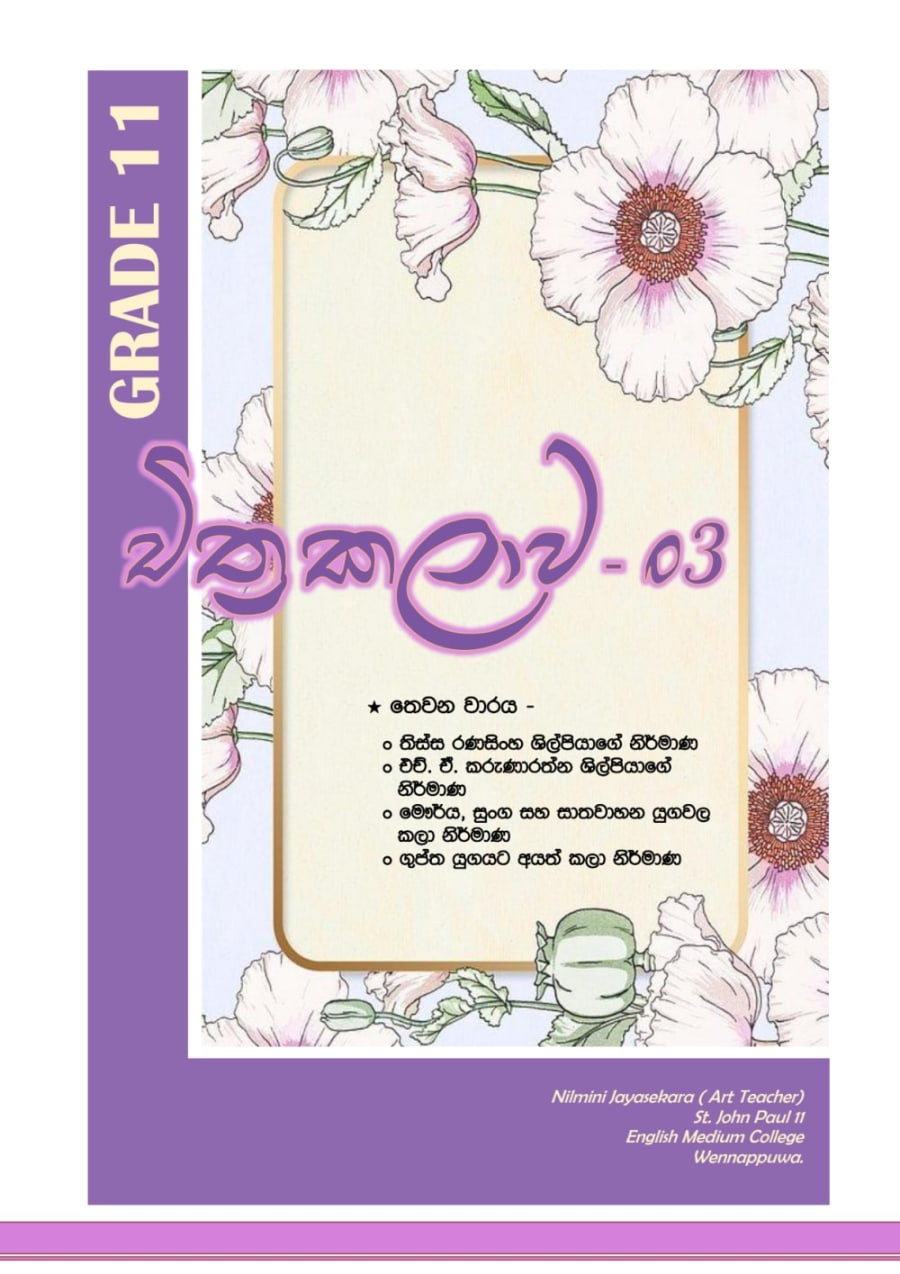
Grade 11 Art Reading Book - Term 3
Grade 11 · ART
Term three of the Grade 11 Art reading book. Four units: the sculpture of Tissa Ranasinghe, the work of H. A. Karunaratne, the art of the Mauryan, Sunga and Satavahana periods, and the art of the Gupta period.
Community rating
Rate this resource
About this resource
What this term covers
The final term of the O/L course is the shortest - four units - which is deliberate: it leaves room for revision. Two Sri Lankan sculptors and two blocks of early Indian art.
- The sculpture of Tissa Ranasinghe
- The work of H. A. Karunaratne
- Art of the Mauryan, Sunga and Satavahana periods
- Art of the Gupta period
How to work through it
Tissa Ranasinghe is the most likely of the four to appear, and his bronzes are distinctive enough to describe confidently: elongated figures, textured surfaces, modern form built on traditional subject matter. Learn one named piece properly.
The Indian periods are usually tested as a sequence rather than individually - what changes from Mauryan through Sunga and Satavahana to Gupta. Learn the sequence as a line of development, with one characteristic work at each stage, and a question about any single period becomes answerable.
Use the rest of the term for revision
With only four units, this term is where the whole two-year appreciation list should be pulled together. Work backwards through Grade 10 term one onwards, one sheet per unit, and time yourself writing full answers rather than reading notes. By this stage the marks come from writing practice, not from new material.


