
The Murals and Sculptures of Dambulla Cave Temple: An Artistic Guide
Most visitors to Dambulla Cave Temple look at the statues and miss the ceiling. A guide to reading the murals and sculptures, for Grade 10 and 12 art students and travellers.
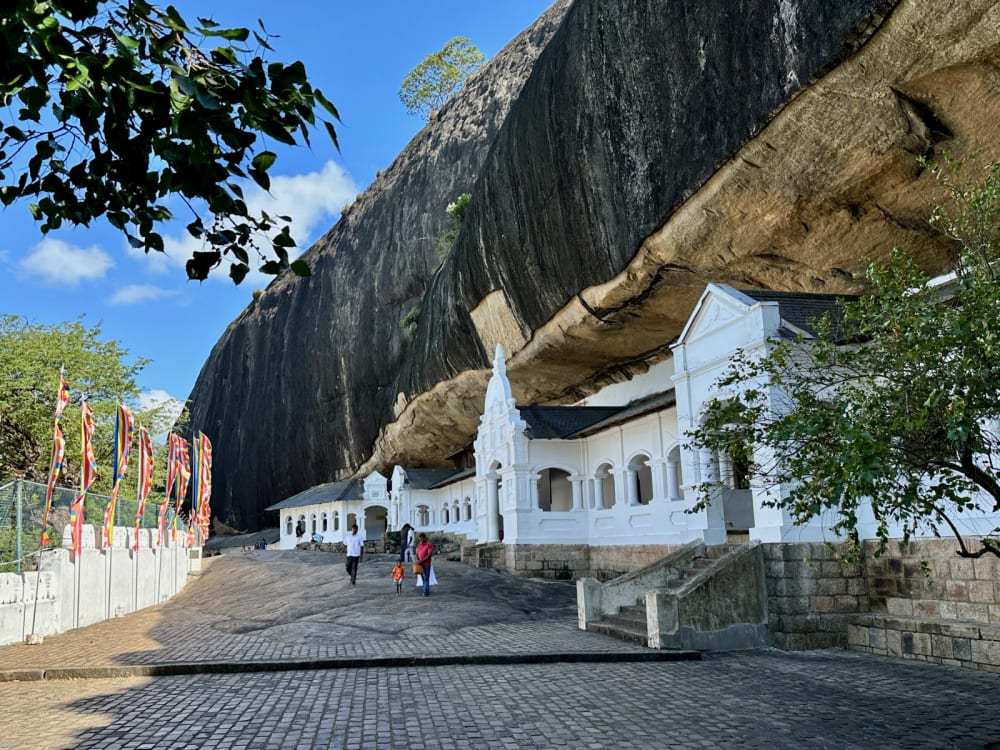
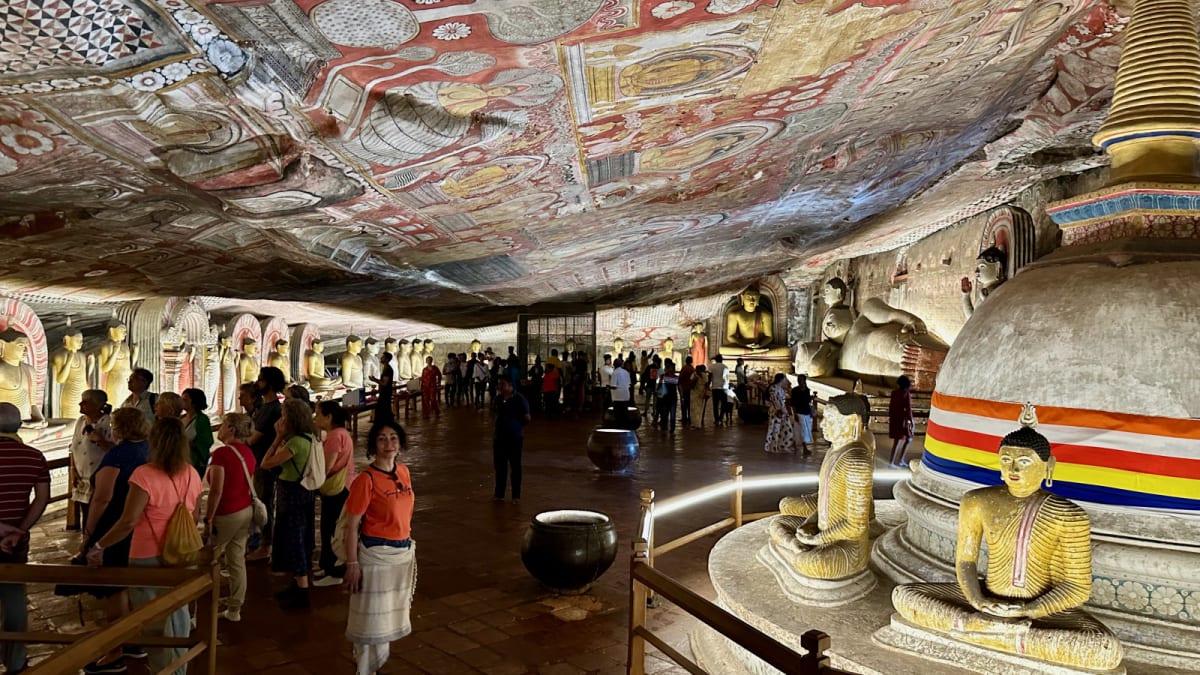
Entering Dambulla Cave Temple, your eyes are immediately drawn to the serene rows of Buddha statues. But take a moment to look beyond them, across the stone walls and up at the dim rock ceiling. Episodes from the Buddha's life, rows of identical meditating figures and floral motifs spread across the entire rock ceiling.
How did the old painter tell a story on stone? What kind of line gives life to these figures? Once you learn to look for these things, a visit to Dambulla becomes a practical art lesson, for Grade 10 and 12 students and for travellers looking for real artistic appreciation alike.
Kandyan Art in an Ancient Sanctuary
Dambulla's history traces back to the 1st century BCE, when King Valagamba (Vattagamani Abhaya), fleeing South Indian invaders from Anuradhapura, took refuge in these rock caves. Later kings added new parts to the temple and restored older works, and in 1991 the site was named a UNESCO World Heritage Site.
Keep one essential point in mind: while the caves are ancient, most of the paintings you see today belong to the 18th-century Kandyan tradition. For centuries, older paintings were painted over again. With the restoration in the time of King Kirti Sri Rajasinghe, the main credit for these paintings goes to the celebrated Nilagama lineage of painters.
The Five Main Caves at a Glance
Dambulla's variety is best seen by visiting its five main caves:
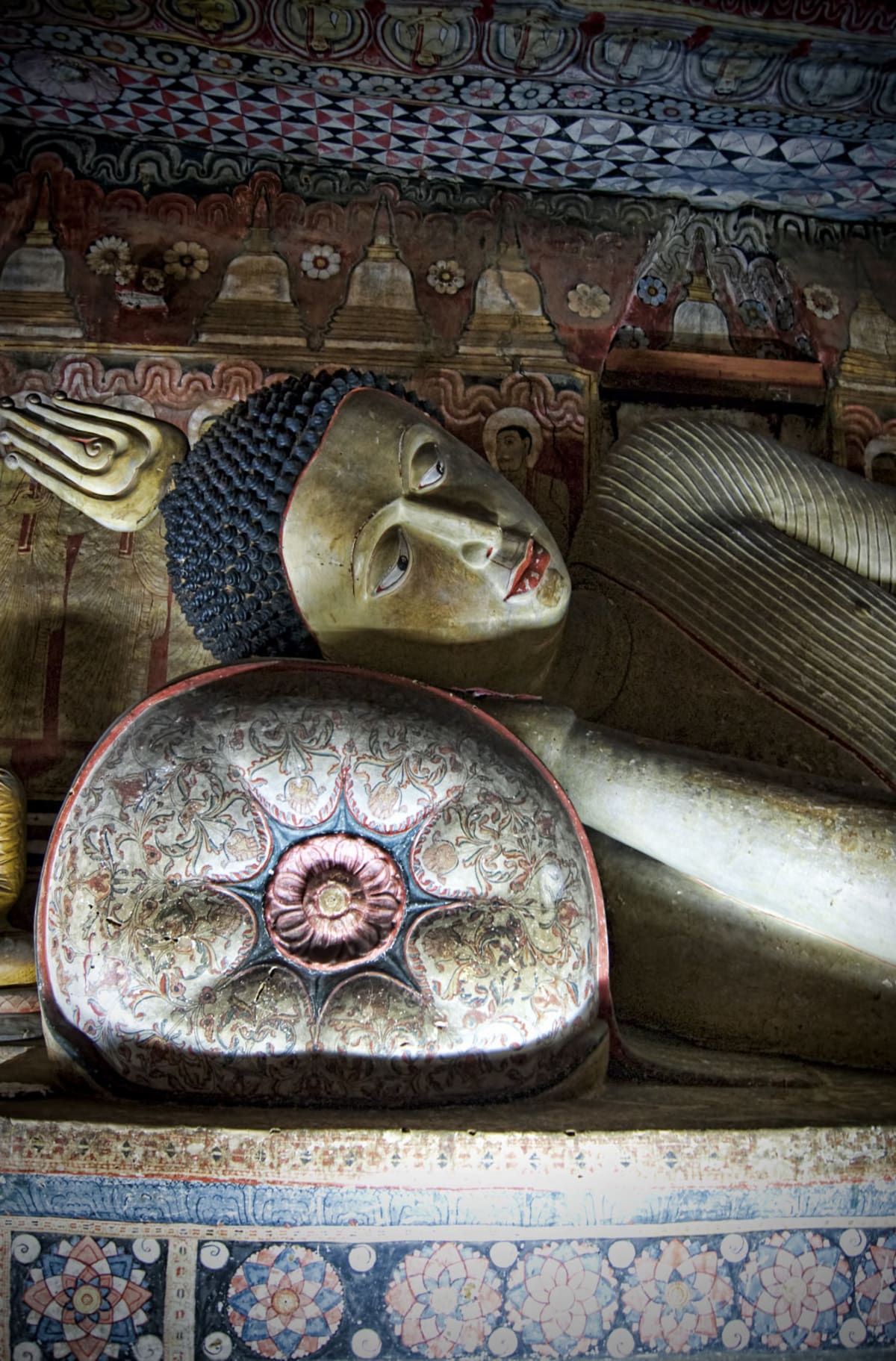
- Devaraja Lena: Dominated by a reclining Buddha about 14 metres long, carved from the rock. Figures of Ananda and God Vishnu can also be seen here.
- Maharaja Lena: The largest cave and the best for seeing the paintings. It holds 56 Buddha statues, a stupa, statues of Kings Valagamba and Nissanka Malla, and a sacred spring dripping from the ceiling into a vessel.
- Maha Alut Viharaya: From the 18th-century Kandyan period, with about 50 Buddha statues and many notable paintings.
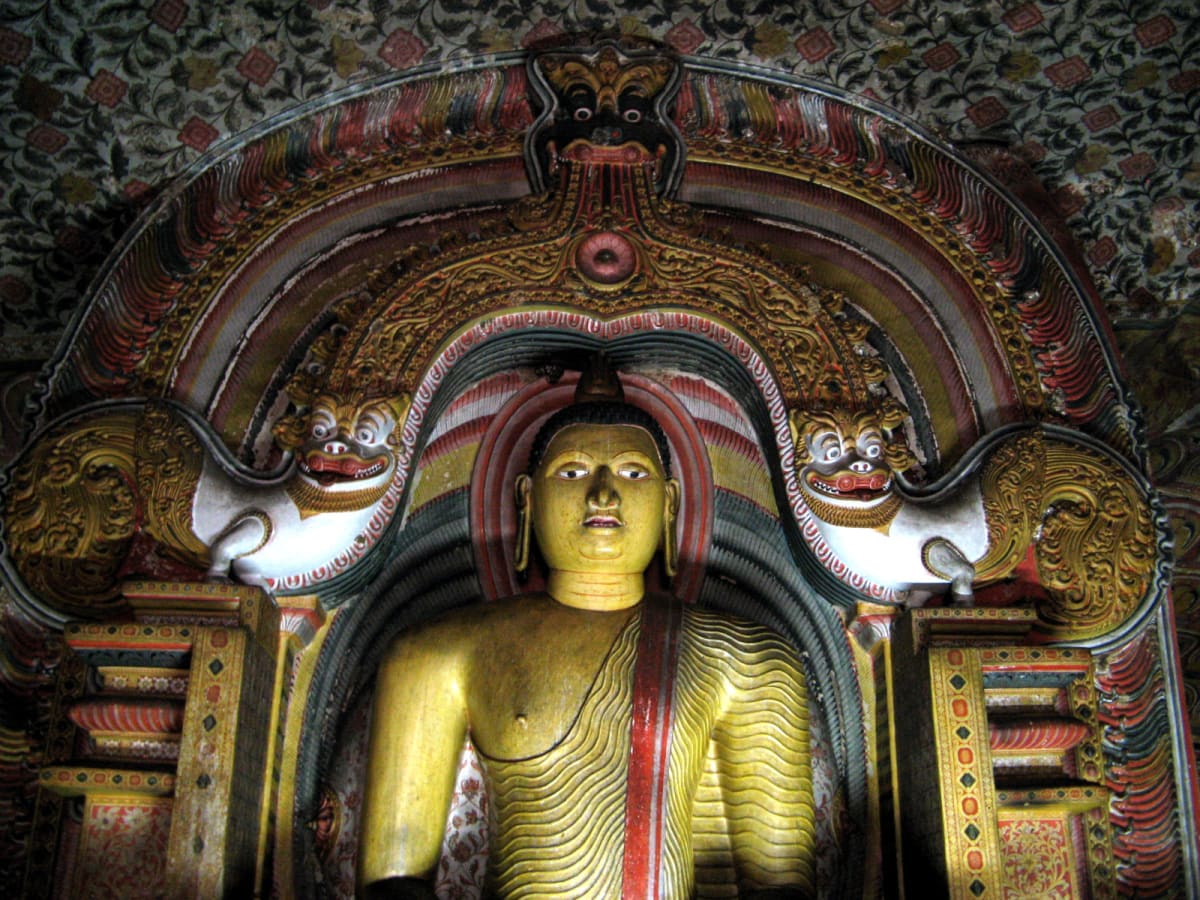
- Pachima Viharaya: A smaller cave whose central Buddha sits under an ornate makara arch.
- Devana Alut Viharaya: A later cave with reclining Buddha statues and figures of gods.
Reading the Walls: The Continuous Narrative Method
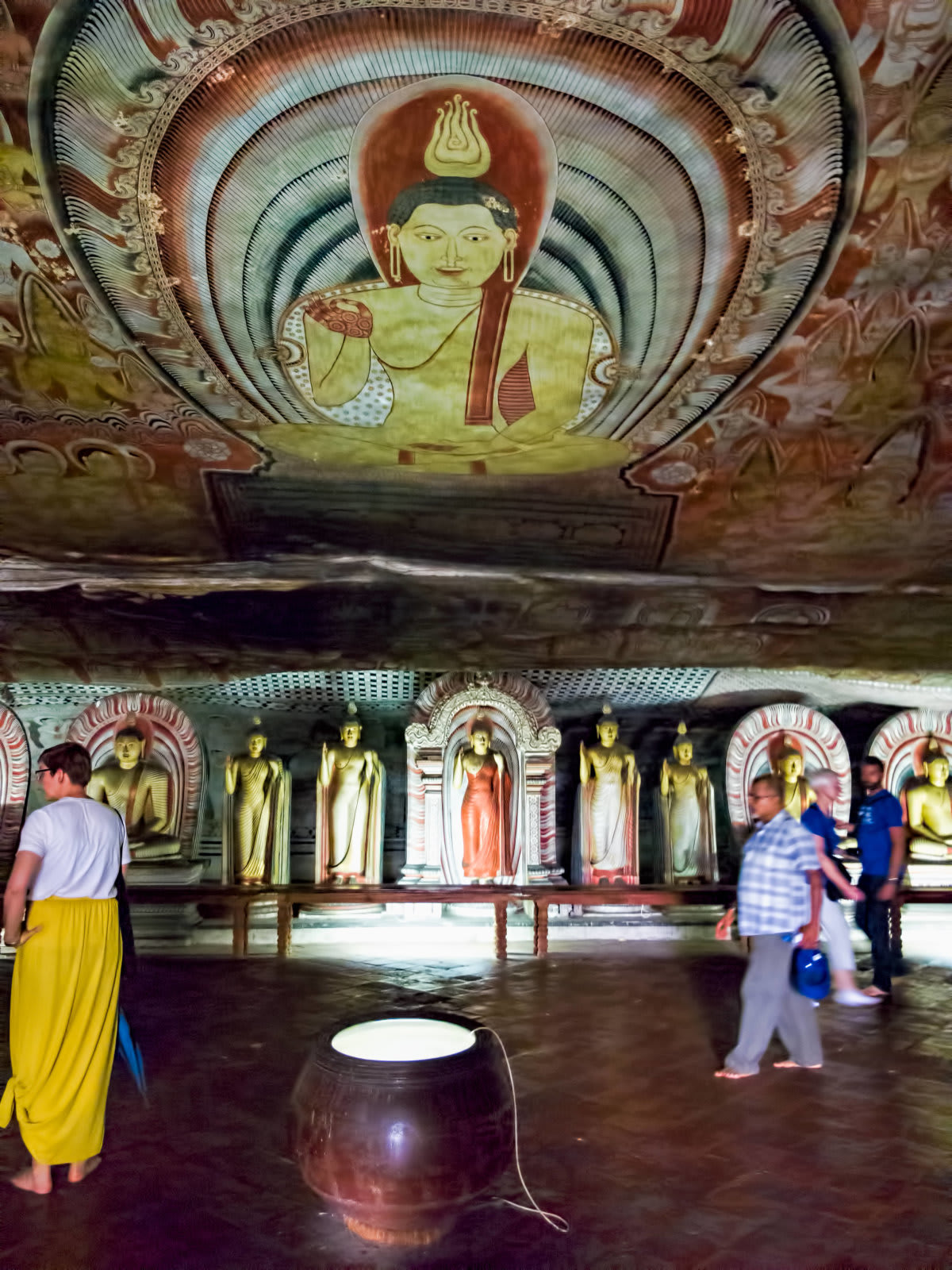
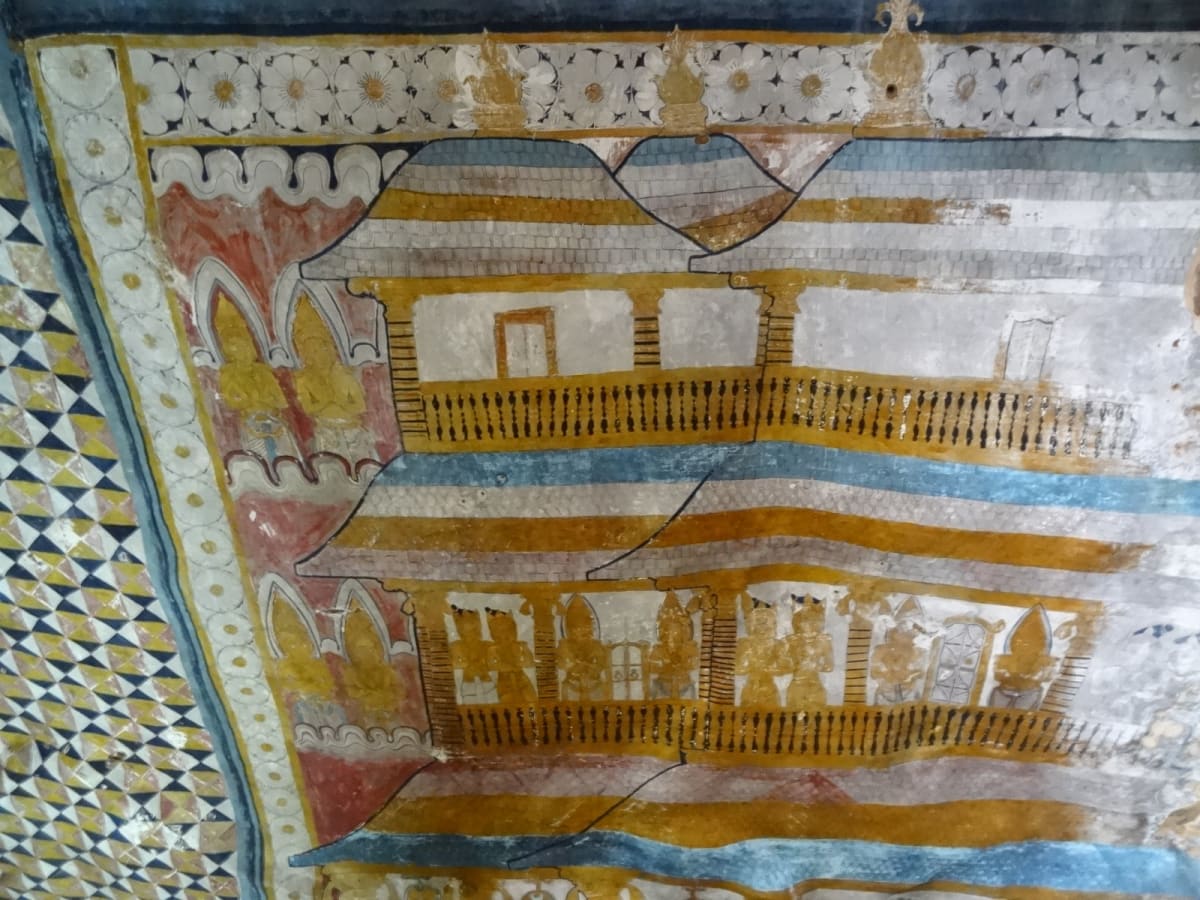
Dambulla's paintings show the Buddha's life, the Suvisi Vivaranaya, Jataka tales and important events in Sri Lankan history. Don't stop at a single figure; look along the horizontal band to the next scene as well. Here you can see the continuous narrative method, where several linked events flow on from one another. The main character can appear more than once in the same band to show different moments of one story. So to understand a painting, identify the figures and also follow the order of events.
Murals to Look at Closely at Dambulla
As you study the rock ceilings, these are the paintings to look for:
1. The Defeat of Mara
This is the most dramatic painting on the rock ceiling:
- At the centre the Buddha sits on a throne, showing the earth-touching gesture (Bhumisparsha Mudra). The halo around him is shaped with orange and red flame patterns.
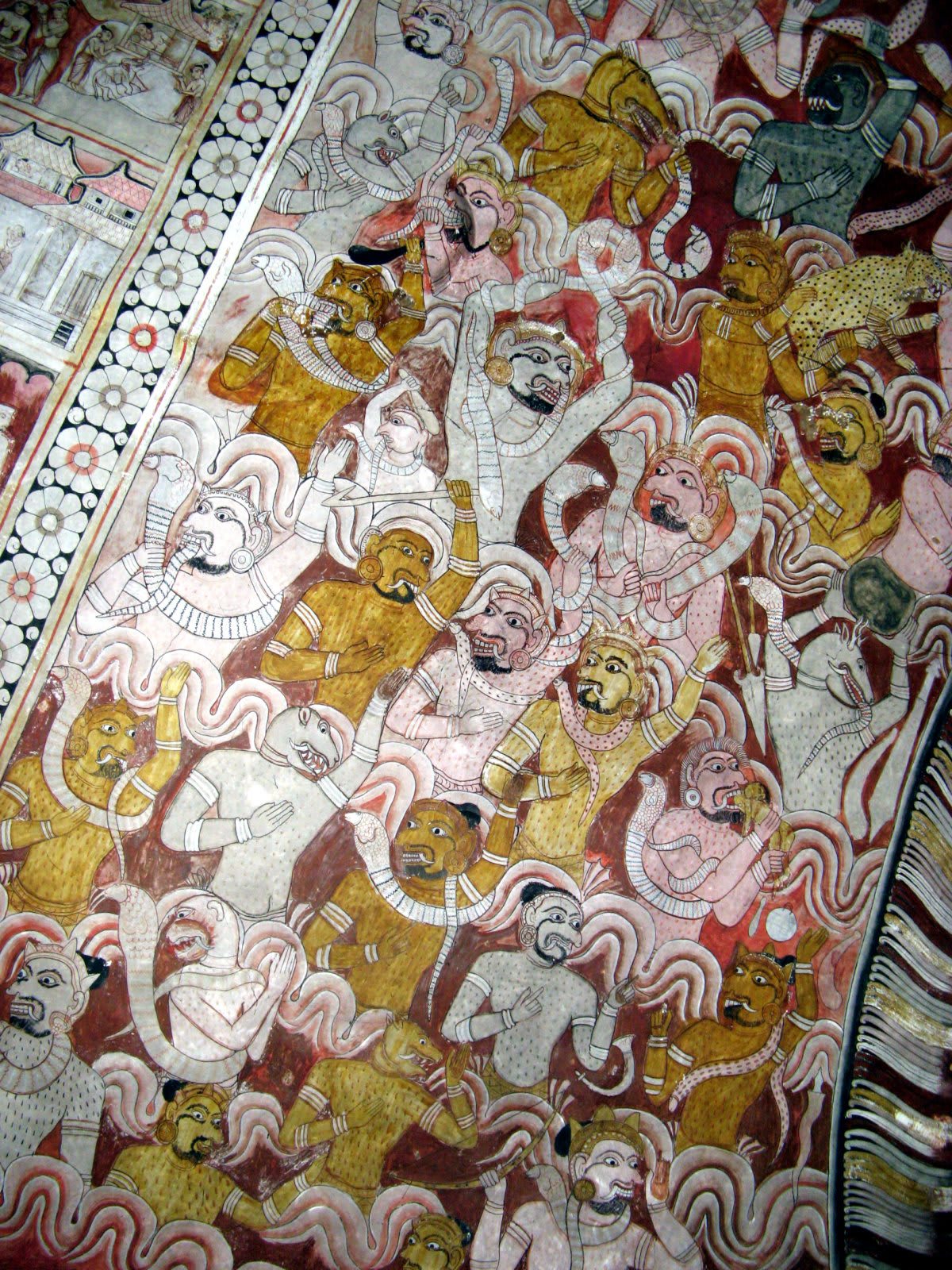
- Around him, Mara's army of distorted faces, carrying weapons and bows and arrows, is painted in close order. In the story, Mara arrives riding the elephant Girimekhala.
- Artistic feature: the painter brings out expression through strong contrast, between the furious chaos of Mara's army and the unshaken calm on the Buddha's face.
2. The Defeat of Mara's Daughters
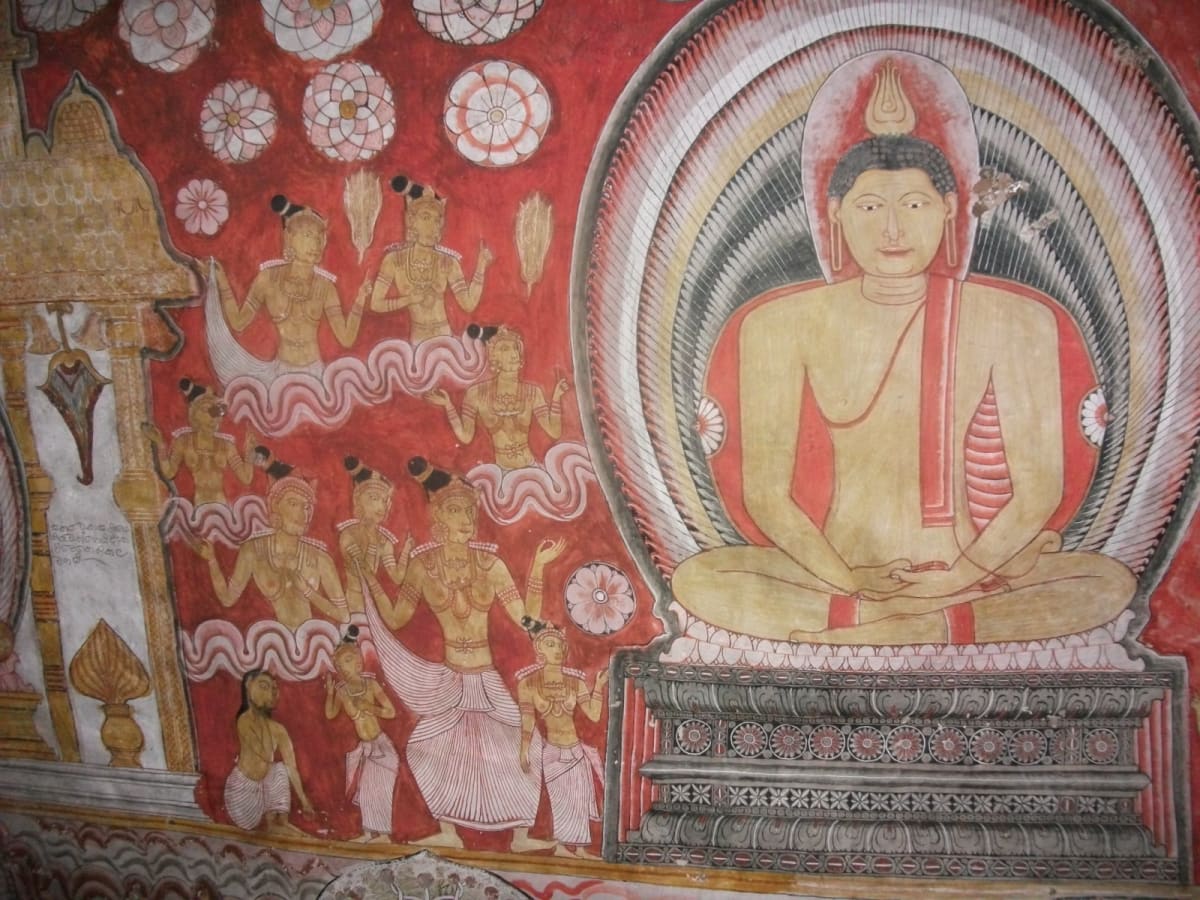
This shows the story of Mara's daughters, Tanha, Rati and Raga, trying to entice the Buddha in the fifth week after his Enlightenment. Slender waists, traditional jewellery and pleated garments are drawn in fluid lines. Among them the Buddha sits unmoved in the meditation gesture.
3. The War of Elara and Dutugemunu
Besides religious themes, events from the island's own history also reach the rock ceiling, and the war of Elara and Dutugemunu is one of them. In the story, King Dutugemunu riding the elephant Kandula fought King Elara on the elephant Mahapabbata. Find this painting in the cave and see how line and the arrangement of figures present the battle.
4. The Arrival of Mahinda and the Sacred Bo Tree
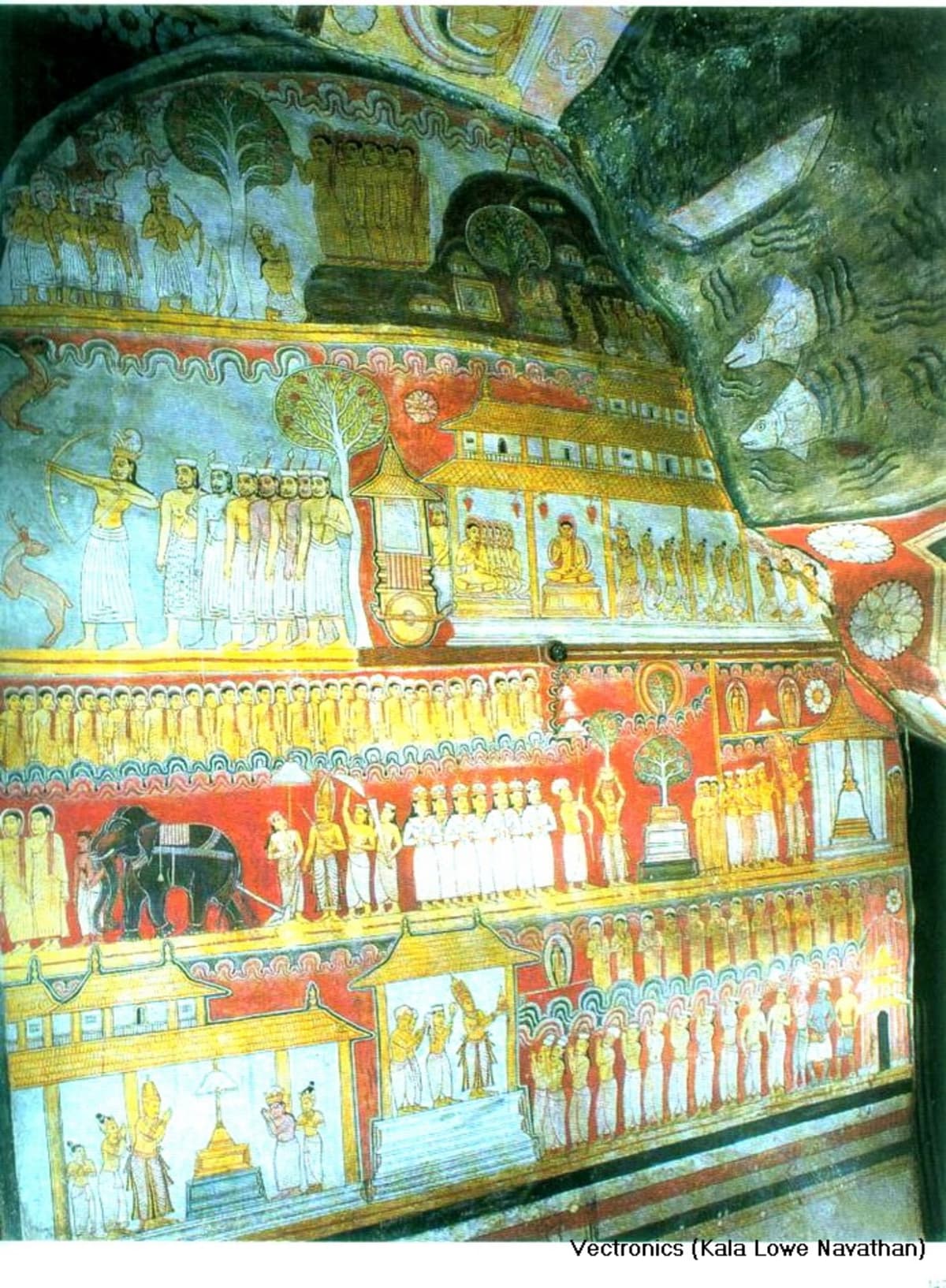
- Arrival of Mahinda: In the story, King Devanampiyatissa was hunting deer on Missaka mountain when he met Arahat Mahinda and his companions. In the painting you can see a figure with a drawn bow, a line of men behind him, a leaping deer, a tree and a row of monks.
- The Sacred Bo Tree: In the story, when Sanghamitta Theri arrived by ship with the Bo sapling, King Devanampiyatissa received it at the sea. In the painting you can see lines of people arranged in several bands, buildings and an elephant.
5. The "Thousand Buddhas" and Lake Anotatta
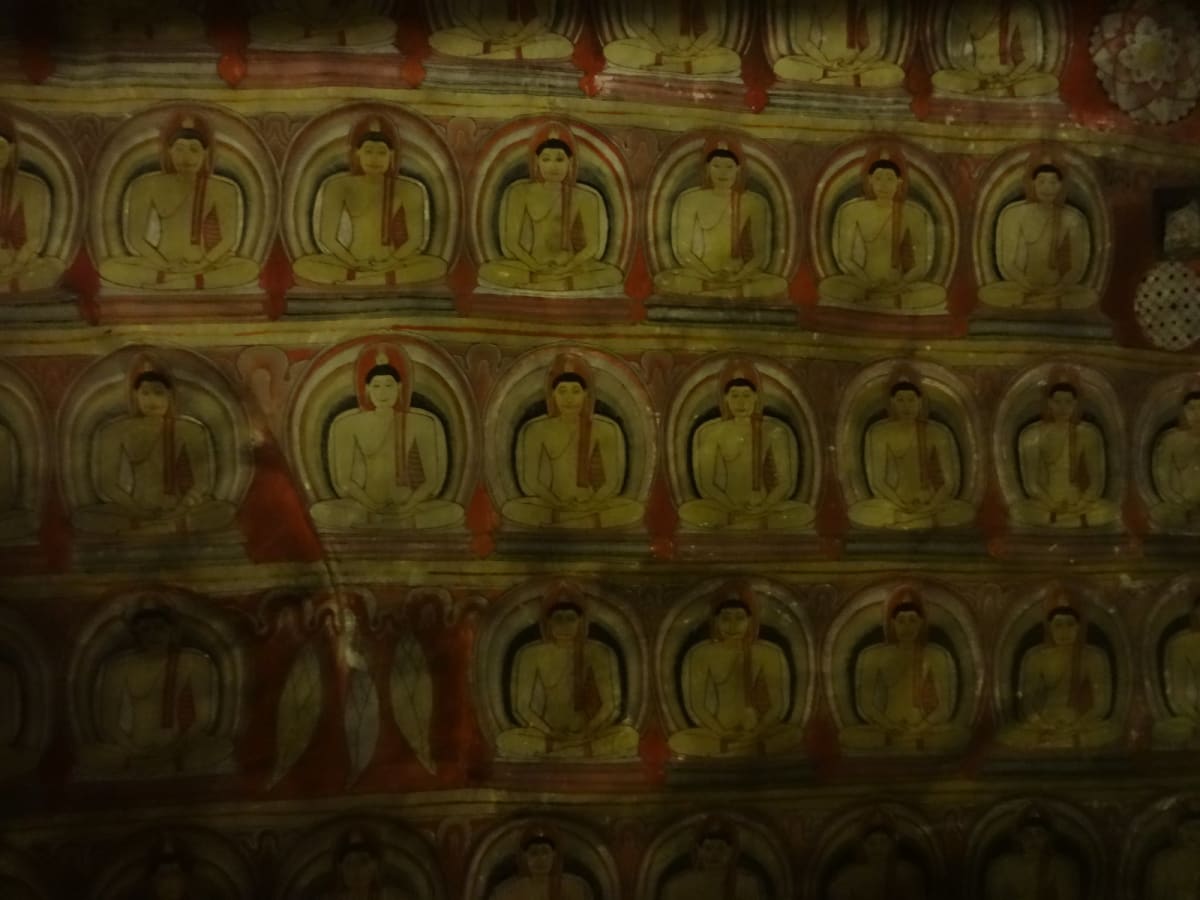
- The Thousand Buddhas: Across the rock ceilings, hundreds of Buddhas in the meditation gesture sit in rows within arches, at the same level and the same size. This creates a visual rhythm that leaves the viewer calm and meditative.
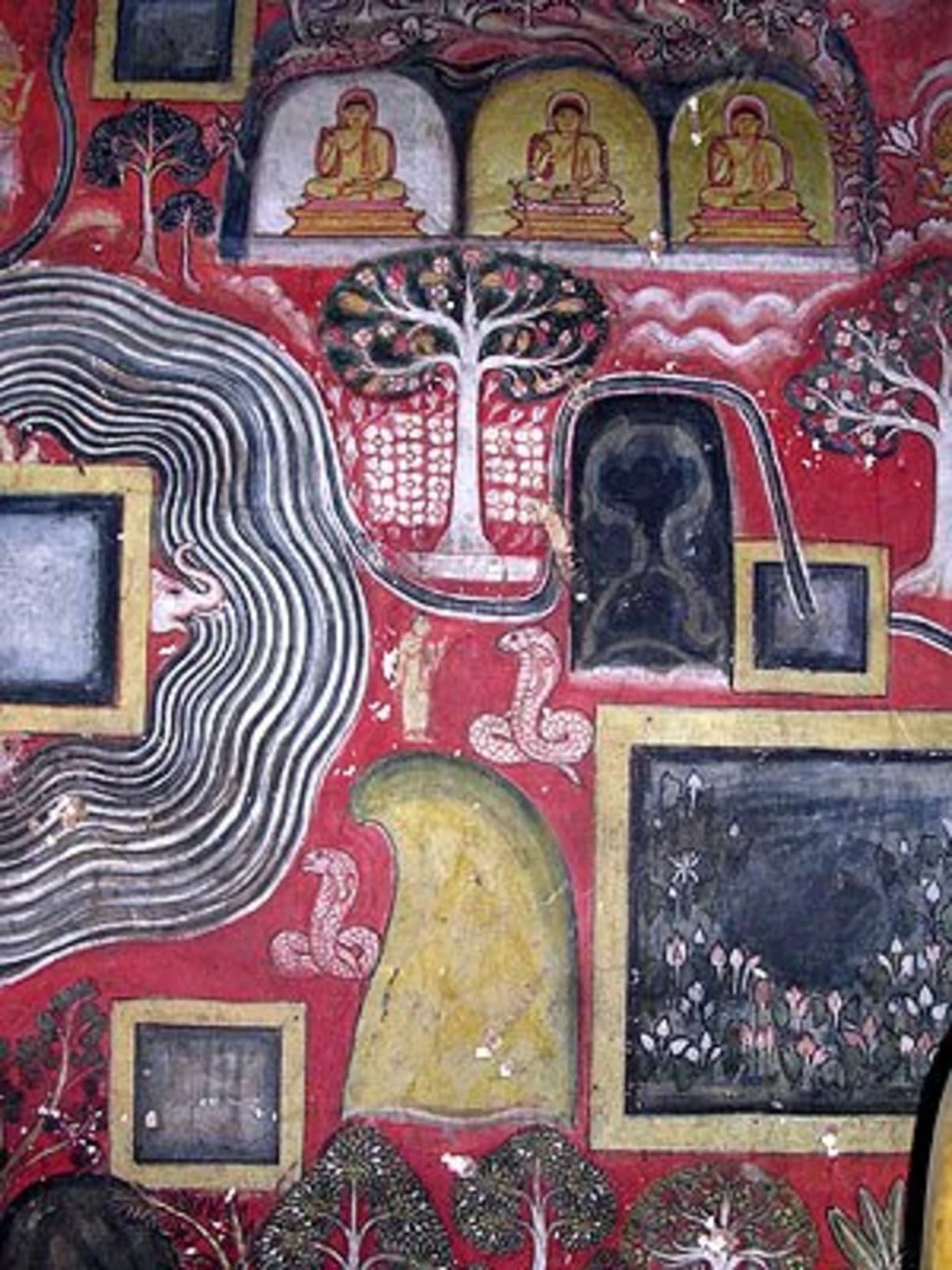
- Lake Anotatta: This lake of the Himalayan forest is drawn with winding, coiled lines and patterns. It is a beautiful composition that recalls modern abstract art.
Line, Flat Colour and Use of Space
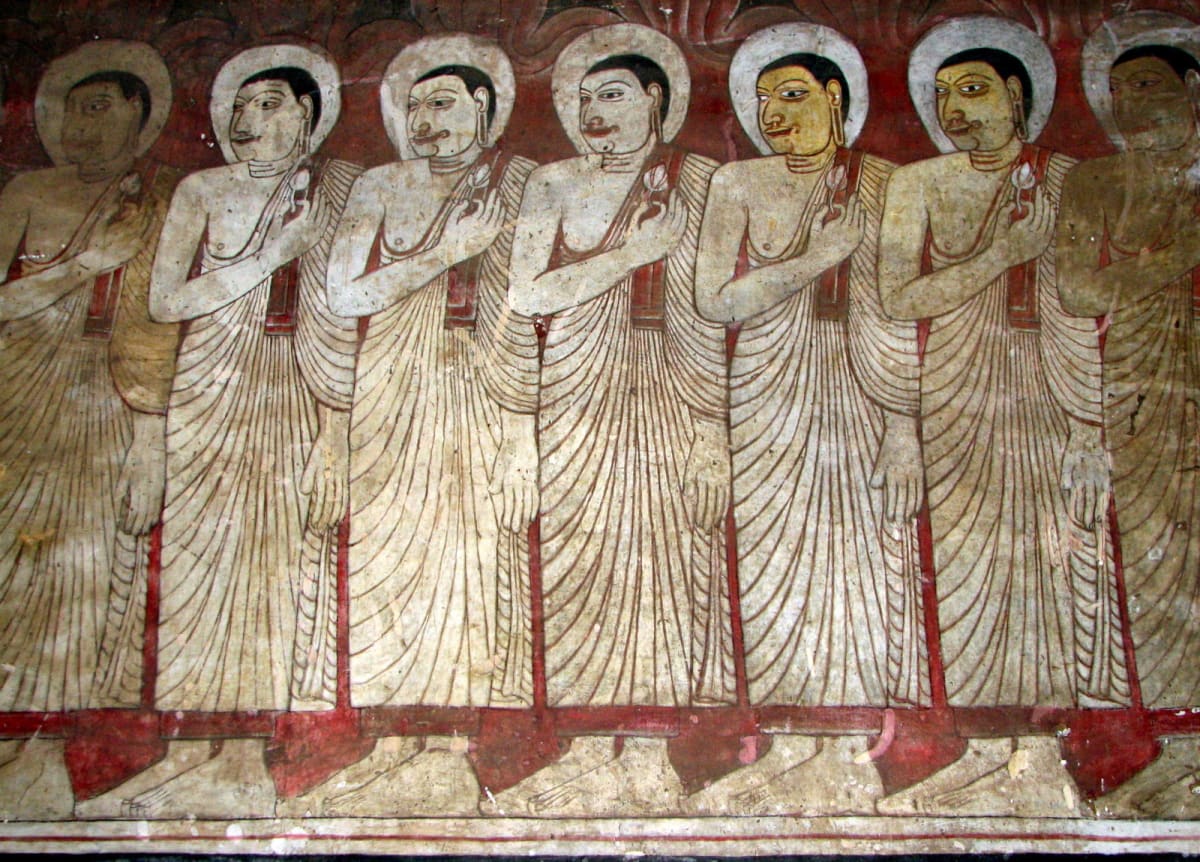
Line work matters greatly in Dambulla's paintings. Strong outlines separate the shape of a face, the pose of a hand and the folds of a garment.
- Colour: Red and yellow stand out, with white, black and a little green used to make details clear. These are tempera paintings on dry plaster, using natural pigments.
- Flat colour planes: Colour is filled in flat, without shadows. The aim is to make the shape of the figure and the story clear rather than to show three-dimensional depth.
- Use of space: Without leaving empty areas, the painter filled the space between figures with flower and creeper patterns, joining the whole painted surface together.
A Comparison for Grade 12 Students
- At Sigiriya the painter tried to give figures three-dimensional depth through light and shade (chiaroscuro).
- Dambulla's Kandyan painters used flat colour planes without shadows and crisp line, turning the whole rock ceiling into an ornamental pattern.
Where Sculpture and Painting Meet
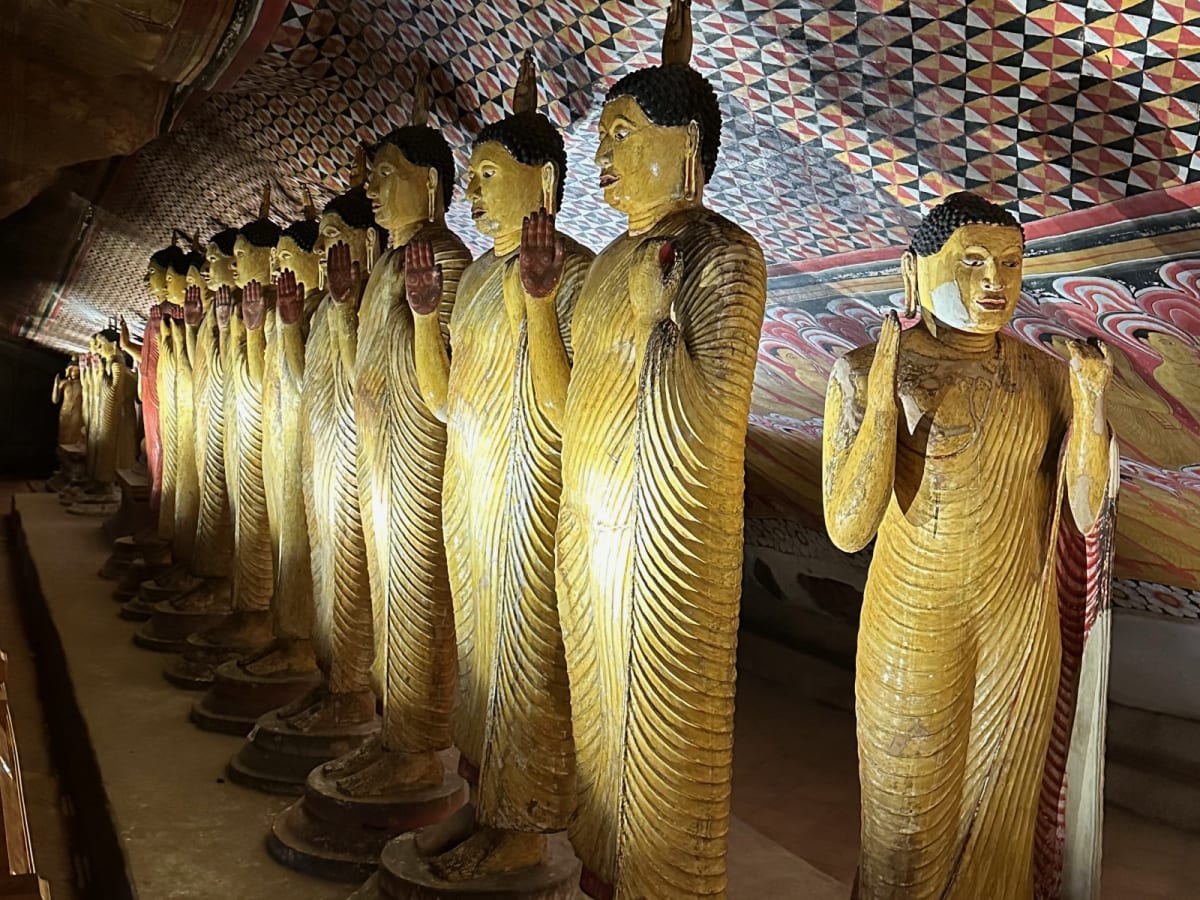
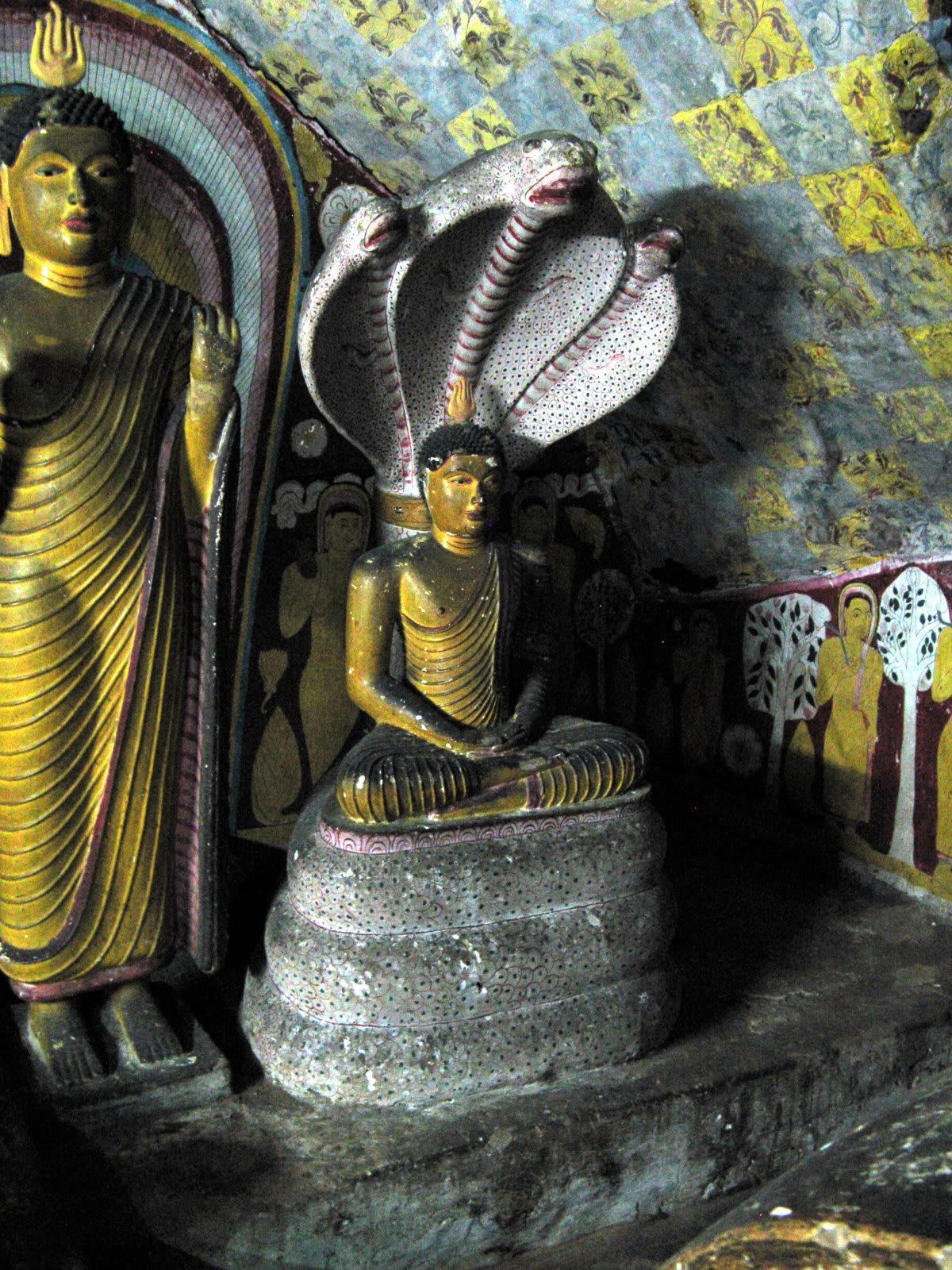
As you look at the seated, standing and reclining Buddha statues, notice their hand gestures, calm expressions and robe folds.
Then look at each statue together with the painted background behind it. The sculpture, made of rock or plaster, and the two-dimensional painting on the rock ceiling blend together to create a calm religious atmosphere inside the cave.
For Students and Travellers
- For students: When answering an exam question, organise these points with examples: the historical background (period, patronage, the Nilagama painters), the names of the five caves, the main paintings (such as the Defeat of Mara and the Arrival of Mahinda) and your artistic evaluation (two-dimensional style, tempera technique, flat colour, fluent line work, filling of the picture plane and expression).
- For travellers: Remove your footwear before entering the caves and dress modestly. Avoid taking photographs with your back to Buddha statues. Do not use flash inside the caves, to help protect the natural pigments of the paintings.
Next time you are at Dambulla, pause quietly in the middle of the Maharaja Lena and look up. Ask yourself: "What story is being told here? How did the painter bring it to life with line and colour? What is the connection between the statue and the painting?" For art students and for travellers who want real appreciation alike, that is the best way to begin knowing Dambulla's art up close.